



-1.png)
Last Updated: July 31, 2026 07:31 PM
Manufacturers today are navigating a perfect storm of pressure. Rising operational costs, supply chain visibility, labor challenges, and increasing expectations for speed are stretching operations and margins alike. Competing in this environment requires more than incremental improvements. It demands real-time clarity into data-driven decision making across operations.
Connected technologies are becoming the foundation of modern manufacturing, giving organizations deeper insight into equipment, inventory, and goods in transit. According to a report published by Fortune Business Insights, the global IoT in manufacturing market size was valued at $141.8 billion in 2025 and is estimated to grow to approximately $1.1 trillion by 2034. This growth is driven by the increasing need for real-time data analytics, automation, and optimizations across production processes. The result of connected devices in this space? Greater reliability and efficiency from the factory floor to the end customer.
Here are three of the most impactful use cases transforming manufacturing today.
Unplanned downtime is one of the most expensive challenges in manufacturing. A single equipment failure can halt production lines, delay orders, and lead to costly emergency repairs.
With connected sensors embedded in machinery, manufacturers can continuously monitor factors such as vibration, temperature, pressure, and performance patterns. Instead of waiting for something to break, systems analyze this data to detect anomalies and early warning signs of failure. 
Predictive maintenance enables:
➜ Teams to shift from reactive to predictive strategies
➜ Repairs to be scheduled during planned downtime
➜ Equipment life extensions
Whether monitoring motors, conveyors, or facility systems like HVAC, predictive maintenance helps keep production moving and reduces the financial burden of unexpected breakdowns.
A company’s warehouse is a critical link between production and fulfillment, yet inventory inaccuracies are common pain points. Stockouts delay orders, overstock ties up capital, and misplaced materials slow down operations.
With technologies like RFID tags, smart shelves, and asset trackers, manufacturers gain real-time visibility into inventory levels and locations. Materials, tools, and pallets can all be tracked automatically.
Key benefits of connected devices in the warehouse include:
➜ Faster picking and order fulfillment
➜ Improved inventory accuracy
➜ Reduced time spent searching for materials or equipment
➜ Better space utilization within the warehouse
Environmental monitoring also plays a role, especially for sensitive materials. Temperature, humidity, and other conditions can be tracked to ensure products are stored safely and in compliance with requirements.
Visibility can often drop off once goods leave the manufacturing facility. Delays, damage, or environmental issues during transit can go unnoticed if not carefully monitored, leading to spoiled goods. Connected tracking devices and sensors provide real-time insight into shipments in transit. Manufacturers can monitor location, temperature, humidity, and even shock for high-value or sensitive goods.
 A key example of this is cold chain monitoring. Temperature-sensitive products rely on a network of monitoring devices that travel with cargo. Whether products are in a shipping container, refrigerated truck, processing plant, or retail freezer, monitoring devices remain with them throughout the journey.
This level of visibility drives:
➜ Faster response to shipping delays or route disruptions
➜ Reduced waste or damage, especially for temperature-sensitive goods
➜ Greater accountability across suppliers and carriers
By extending visibility beyond the factory walls, manufacturers can make their supply chains more resilient and responsive in the face of disruption.
As manufacturers deploy connected devices across facilities, warehouses, and remote sites, reliable connectivity becomes crucial. Traditional Wi-Fi and public cellular networks often struggle to deliver the coverage, security, and performance required for industrial environments.
Private wireless networks offer dedicated, secure connectivity designed for manufacturing operations, delivering reliable coverage, low latency and high performance, enhanced security, and seamless scalability. These networks enable connected use cases like predictive maintenance, quality monitoring, asset tracking, and cold chain visibility to operate consistently and securely, without interruption.
While the benefits of connected manufacturing are clear, many organizations face a common challenge: moving from strategy to successful deployment. Managing devices, connectivity, data, and ongoing support across facilities, warehouses, and assets in the field can quickly become complex. That’s where a more hands-on approach can make a world of difference.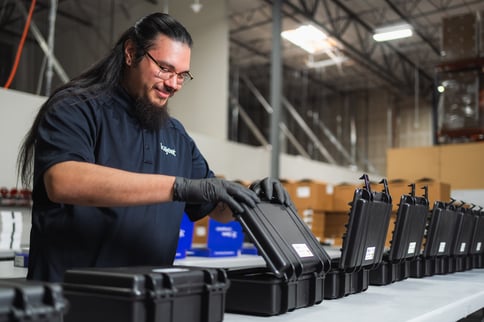
Kajeet Concierge services help manufacturers simplify the operational side of connected initiatives by supporting the full device lifecycle, from sourcing and provisioning to deployment, monitoring, and ongoing management. With the right support model, manufacturers can:
➜ Roll out connected solutions faster
➜ Reduce internal team strain
➜ Improve device uptime
➜ Scale initiatives with less operational risk


.jpg)



.png)