


Written By: Ashley Samuels
Last Updated: October 20, 2026 07:21 PM
The best IoT SIM is the one that keeps your application working without creating an unmanageable support burden. The top IoT SIM cards for US businesses in 2026 are Kajeet smartSIM for managed US deployments, KORE Super SIM for API-driven connectivity, Hologram for self-service fleet control, Eseye for device-led engineering, Soracom for cloud-integrated applications, Onomondo for network visibility, and 1NCE for low-bandwidth telemetry.
For a US deployment, that means evaluating carrier access, fleet controls, device services, and ongoing costs together, not buying on a coverage map alone.
This guide compares seven IoT SIM providers. Kajeet is our overall pick for organizations seeking managed US connectivity, a unified platform, and hands-on device support. Other providers may fit better when self-service development, specialized connectivity engineering, or low-bandwidth pricing drives the decision.
An IoT SIM stores the credentials a device uses to authenticate to a cellular network. It does not determine coverage by itself: the modem, antenna, supported radio technologies, carrier agreements, and deployment location all matter.
The difference between an IoT SIM and a normal SIM is usually the service around it. IoT offerings can add fleet management, shared or usage-based data plans, remote provisioning, and industrial form factors. Those features vary by product; an IoT label does not guarantee them.
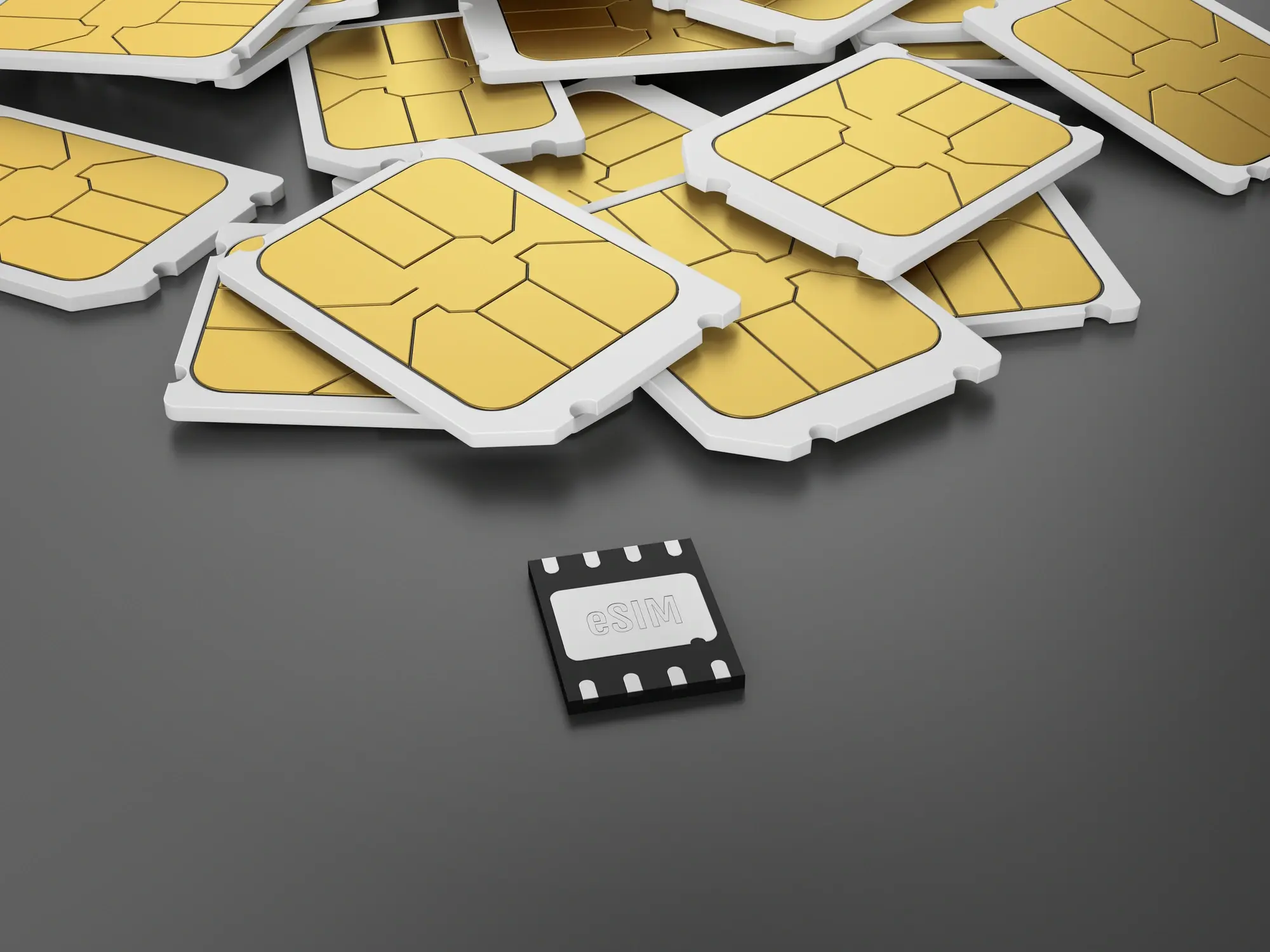
What is an IoT eSIM? It is a SIM solution supporting remote profile provisioning on compatible hardware. An eSIM is not necessarily soldered down, and an embedded chip does not automatically provide remote carrier switching.
The best IoT SIM for the US should match your actual locations, application requirements, and operating model.
Compare IoT eSIM providers and physical-SIM offerings against the same requirements. A good M2M SIM card provider should explain not only how a device connects, but who handles activation, troubleshooting, replacements, and changes after deployment.
Use this shortlist to identify the operating model worth testing.
| Provider | Best-Fit Priority | Management Approach | Main Buying Check |
|---|---|---|---|
| Kajeet | Managed US deployments | Sentinel, APIs, and Concierge | Define service scope |
| KORE | API-driven connectivity | Console and APIs | Confirm US networks |
| Hologram | Self-service fleet control | Dashboard and orchestration | Check feature tiers |
| Eseye | Device-led connectivity engineering | Infinity platform | Define engineering scope |
| Soracom | Cloud-integrated applications | Console and cloud services | Model service charges |
| Onomondo | Network visibility and usage control | Diagnostics and APIs | Confirm US access |
| 1NCE | Low-bandwidth telemetry | Portal, APIs, OS tools | Calculate lifetime data |
These are buying-fit assessments, not laboratory performance rankings. In the tables below, Strong means a documented capability fits the criterion; Verify means the SKU or contract matters; Test means a pilot must establish the result. Price labels describe commercial models, not affordability scores.
Kajeet combines multi-carrier connectivity with Sentinel's fleet visibility, policy controls, reporting, and automation; SentinelOS gives developers REST APIs, a CLI, and MCP tools for automating those controls. Concierge adds help with device selection, setup, installation, and ongoing maintenance. That combination makes Kajeet a strong overall fit when an organization needs connectivity and operational help from one partner, rather than another platform to run entirely itself.
Assess the complete service package, not just the SIM.
| Criterion | Assessment | Buying Evidence |
|---|---|---|
| Connectivity | Strong | Multi-carrier access |
| Management platform | Strong | Sentinel controls |
| Device services | Strong | Concierge support |
| eSIM support | Verify | Hardware and profiles |
| Reliability | Test | Switching and recovery |
| Deployment scale | Strong | Central fleet operations |
| Pricing | Quote | Data and service scope |
Confirm supported switching behavior on the proposed devices. Teams prioritizing a published self-service rate card may find another model easier to evaluate initially.
KORE Super SIM offers multi-network connectivity, a management console, and REST APIs for SIM lifecycle actions and usage queries. Its programmable controls suit teams integrating connectivity into their own applications and operations.
Evaluate Super SIM against the exact US network requirements.
| Criterion | Assessment | Buying Evidence |
|---|---|---|
| Connectivity | Strong | Multi-network Super SIM |
| Management platform | Strong | Console and APIs |
| Device services | Verify | Contracted deployment scope |
| eSIM support | Strong | Downloadable profiles |
| Reliability | Test | Fallback behavior |
| Deployment scale | Strong | Fleet API controls |
| Pricing | Usage-based | Per-SIM, per-network terms |
Do not assume every KORE product includes the same networks, services, or commercial terms.
Hologram pairs its dashboard and APIs with Hyper eUICC SIMs and Conductor profile orchestration. Its published product options include SGP.02 and SGP.32; availability and features depend on the selected SIM. Outage Protection is a meaningful capability to evaluate, not a reason to skip recovery testing.
Start with the intended SIM and software package.
| Criterion | Assessment | Buying Evidence |
|---|---|---|
| Connectivity | Strong | Multi-network access |
| Management platform | Strong | Dashboard, APIs, Conductor |
| Device services | Verify | Support package scope |
| eSIM support | Strong | Hyper eUICC options |
| Reliability | Test | Outage Protection behavior |
| Deployment scale | Strong | Bulk fleet operations |
| Pricing | Self-service | Usage plus recurring fee |
Hologram's published self-service pricing lists $0.03 per MB, a $1 monthly recurring charge per SIM, and a $3 SIM card. Custom plans differ; confirm which advanced features are included.
Eseye combines AnyNet+ connectivity with its Infinity IoT Platform and device-focused expertise. Its published offering includes device assessments and connectivity optimization, making it a credible option when hardware behavior is central to the project.
Separate the connectivity subscription from the engineering engagement.
| Criterion | Assessment | Buying Evidence |
|---|---|---|
| Connectivity | Strong | AnyNet+ multi-network access |
| Management platform | Strong | Infinity platform |
| Device services | Strong | Device assessment offering |
| eSIM support | Strong | eUICC profile capabilities |
| Reliability | Test | Recovery and routing |
| Deployment scale | Strong | Centralized fleet control |
| Pricing | Quote | Connectivity and services |
Confirm US carrier access, application routing, and the support responsibilities included in your proposal.
Soracom Air for Cellular connects SIM-equipped devices to cellular networks and integrates with private networks and cloud services. Its documentation describes usage and session visibility, configurable SIM groups, and bulk-order registration settings. Those capabilities suit technical teams building connectivity into a broader cloud architecture.
Evaluate the whole application path, not just mobile data.
| Criterion | Assessment | Buying Evidence |
|---|---|---|
| Connectivity | Verify | Subscription-specific US access |
| Management platform | Strong | Console and cloud integration |
| Device services | Verify | Registration and support scope |
| eSIM support | Verify | Available SIM formats |
| Reliability | Test | Network and cloud path |
| Deployment scale | Strong | Groups and registration controls |
| Pricing | Plan-based | Connectivity and service usage |
Check the current subscription, supported US networks, and charges for each cloud or networking service you need.
Onomondo emphasizes non-steered network access, diagnostics, APIs, and usage-based charging. Its current pricing page also lists an eIM offering for remote operator-profile management. That makes it worth evaluating when network visibility and connectivity control are priorities.
Match the SIM and platform tier to your operating requirements.
| Criterion | Assessment | Buying Evidence |
|---|---|---|
| Connectivity | Strong | Non-steered network access |
| Management platform | Strong | Diagnostics and APIs |
| Device services | Verify | Deployment support scope |
| eSIM support | Verify | eIM and compatible hardware |
| Reliability | Test | Network selection behavior |
| Deployment scale | Strong | Fleet controls |
| Pricing | Usage-based | Data and feature tiers |
Request the applicable US network rates and confirm which troubleshooting, security, and support features require a higher tier.
1NCE's core prepaid model is attractive for predictable, low-bandwidth telemetry. Its portal, APIs, and OS tools add connectivity administration and application support. The key question is whether the included data matches the device's real lifetime consumption.
Evaluate the base plan separately from optional higher-data services.
| Criterion | Assessment | Buying Evidence |
|---|---|---|
| Connectivity | Verify | US network and technology |
| Management platform | Strong | Portal, APIs, OS tools |
| Device services | Verify | Integration and support scope |
| eSIM support | Verify | SIM-format eligibility |
| Reliability | Test | Application recovery |
| Deployment scale | Strong | Centralized SIM controls |
| Pricing | Prepaid | Defined lifetime allowance |
The US Lifetime Flat pricing page lists $14 for 10 years with 500 MB, with SIM-format charges separate. Budget for top-ups and optional services; this is not unlimited data for every device workload.
The best multi-network SIM for IoT connectivity must support the right carriers and radio technologies where your devices operate. Network count alone does not establish indoor coverage, rural performance, or access under your chosen plan.
The IoT SIM with the best coverage at one installation may perform differently at another. Test the production modem, antenna, enclosure, and firmware in representative locations.
Also distinguish access to multiple networks from active recovery. Ask what triggers a switch, how long reconnection takes, and whether application sessions recover without intervention. Our explanation of why SIM card profiles matter provides useful context for evaluating the underlying access model.
The best eUICC SIM for IoT devices should fit the hardware, provisioning architecture, and planned service life. Remote profile changes can reduce physical replacements, but technical compatibility and commercial permission to change providers still matter.
The benefits of eUICC SIM cards for IoT include more flexible profile management and fewer site visits. They do not automatically guarantee seamless switching, unrestricted operator choice, or better throughput.
How do I select a suitable eSIM for IoT devices? Confirm form factor, environmental rating, supported provisioning standard, profile ownership, and the process for recovering a failed update. Use our guide to the SGP.32 IoT eSIM standard to evaluate the architecture without confusing a roadmap with a deployable feature.
The best IoT SIM for large-scale deployment should make testing, staging, activation, monitoring, and exceptions repeatable. Leading IoT SIM cards for enterprise use need operational controls, not just a favorable data rate.
Which IoT SIM offers the best performance? Compare application success, latency, packet loss, reconnection time, and battery behavior under the same conditions. The most reliable IoT SIM is not necessarily the one advertising the broadest footprint.
When deciding how to choose a secure IoT SIM for mission-critical applications, start with access control, device identity, traffic protection, and recovery procedures. NIST's IoT cybersecurity guidance provides a broader security framework; a SIM does not secure the whole device.
For M2M SIM cards with centralized management tools, providers should demonstrate actual permissions, alerts, diagnostics, and audit records. Keep SIM-jacking risks and prevention in view when designing account access and incident response.
IoT SIM pricing should reflect the whole operating lifecycle: hardware, activation, recurring access, data, software features, support, and replacement work. Published per-MB rates are not directly comparable when the included services differ.
Compare the best IoT SIM cards on connectivity and cost using your own usage distribution. Include quiet devices, peak months, firmware downloads, retries during poor coverage, and unexpected reconnections.
When you bulk-order IoT SIM cards, flexible pricing models can help, but ask what happens before activation and after deployment. Clarify pooled allowances, inactive-device charges, minimum commitments, overages, and whether support costs change with fleet size. A smaller connectivity bill can still produce a larger operating bill if your team must absorb provisioning and fieldwork.
Before choosing a provider, make the shortlist prove three things:
For US organizations that want those responsibilities coordinated, Kajeet is this guide's best overall managed-deployment choice. smartSIM provides multi-carrier flexibility, Sentinel brings centralized visibility and control, and Concierge adds device and deployment assistance. The advantage is a coordinated operating model, not a promise that one SIM wins every technical comparison. Evaluate Kajeet's multi-network IoT SIM connectivity against your hardware, locations, and support requirements to decide whether that model fits. To start, get budgetary pricing from Kajeet Advisor or talk to a Kajeet IoT connectivity expert.

Ashley leads the marketing organization at Kajeet, bringing deep expertise in demand generation, brand strategy, and marketing operations to the wireless technology space. When she isn't deep in go-to-market strategy, you can usually find her wrangling a bustling household in the D.C. area and volunteering in the local community.