So, What Exactly Is Fixed Wireless Internet?
You're tasked with getting reliable internet to a new business location, but fiber isn't available and cable's spotty at best. Sound familiar? If you've ever felt stuck between "expensive fiber buildout" and "unreliable satellite," fixed wireless internet might just be the answer.
Fixed wireless internet delivers a broadband connection using radio signals (such as 4G LTE and 5G) instead of physical cables like fiber, coax, or DSL lines.
How it works
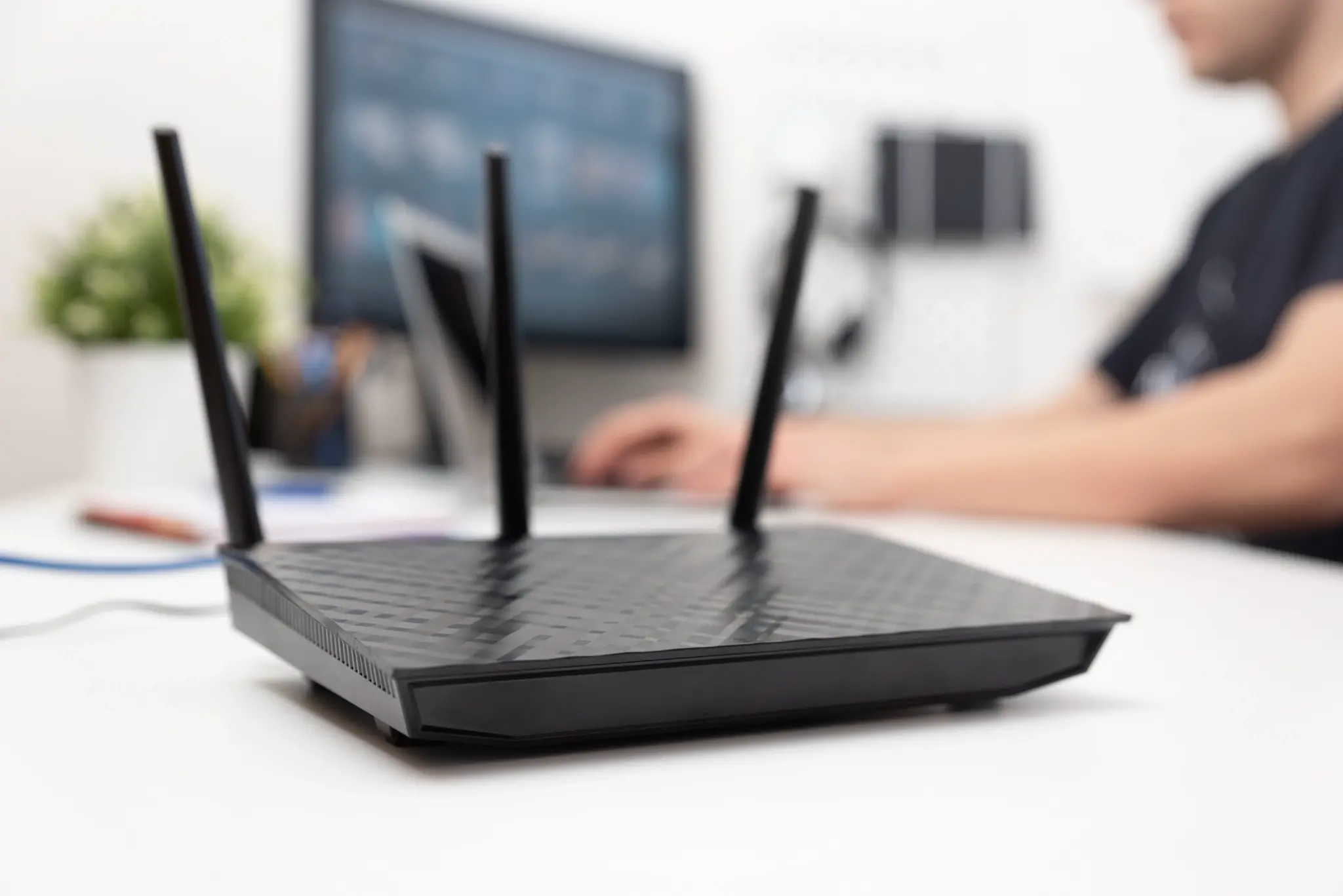
A fixed wireless access (FWA) router receives high-speed internet data wirelessly from a nearby cellular tower or base station. Instead of using physical cables or fiber lines to your building, it uses radio signals (such as 4G LTE or 5G) and converts them into a standard Wi-Fi and Ethernet network for your devices.
Typical fixed wireless installation process
Signal check/pre-qualification: Provider checks coverage at your address to confirm you're within range of a tower with adequate signal strength.
Equipment setup:
- You receive a router with antennas and a pre-installed SIM
- Place the receiver near a window with decent signal
(often just needs to sit on a shelf or windowsill, not necessarily mounted outside)
- Plug it in, connect to power
- Router auto-connects, you're online in minutes
Professional installation (if needed): For areas with a weaker 4G LTE or 5G signal or business-grade fixed wireless (WISPs), a technician may need to:
- Mount an antenna on the roof or an exterior wall
- Align it precisely toward the tower (line-of-sight is critical)
- Run a cable from the antenna to an indoor router
In most cases, installing a fixed wireless solution is as easy as setting up a Wi-Fi router — no technician needed. For rural WISP or business installations requiring outdoor antenna mounting, it's still simpler than running new cable, but may require a scheduled professional visit.
Key characteristics of fixed wireless internet
"Fixed" vs. mobile wireless: Unlike your phone's cellular data, the receiver stays in one place — it's not portable. This distinguishes it from mobile wireless (like a hotspot) and from satellite internet (like Starlink), which doesn't need a nearby tower.
No buried cables: This makes it cheaper and faster to deploy in rural or hard-to-wire areas where laying fiber or cable would be expensive.
Line of sight matters: Performance depends heavily on a clear path between your receiver and the provider's tower — trees, hills, and buildings can potentially interfere with signal strength.
Speeds: Modern fixed wireless (including 5G-based internet from the major carriers) can offer speeds comparable to cable in decent conditions, though it can be more variable than wired connections, especially during bad weather or network congestion.
Most fixed wireless plans deliver 100–300 Mbps, with premium plans in strong 5G coverage areas reaching up to 1 Gbps. For reference, here are typical speed requirement for different businesses:
- Small businesses: 25-100 Mbps
- Medium businesses: 100-500 Mbps
- Enterprises: 1+ Gbps with redundant connections
Licensed vs. Unlicensed: Does It Matter?
Licensed fixed wireless operates on FCC-regulated frequencies, meaning you get guaranteed bandwidth and less interference—think of it as having a reserved parking spot. Unlicensed fixed wireless uses open frequencies (like Wi-Fi), which is more affordable but shares space with other devices, potentially causing congestion during peak times.
For business-critical operations, licensed spectrum often wins. For supplementary or backup connectivity, unlicensed can do the trick without breaking the bank.
Fixed Wireless vs. Cable and Fiber
When deciding between fixed wireless and traditional wired connections (cable and fiber), it depends on your location, timeline, and more. Here is when you should consider fixed wireless access:
- Availability where wired options don't exist: This is the biggest one. Laying fiber or cable is expensive per household, so providers often skip rural or low-density areas entirely. Fixed wireless only needs a transmitter tower and line-of-sight receivers, so it's often the only broadband option available, not just a cheaper alternative.
- Faster deployment: Trenching cable or running fiber lines can take months or years, especially with permitting and construction. Setting up a wireless router can take as little as a few minutes.
- Lower installation cost: No digging, no running lines underground or along poles. This keeps both the provider's cost and (often) the customer's installation cost lower.
- Avoiding wired provider monopolies: In many areas, there's only one cable or fiber provider. Fixed wireless gives people a second option, sometimes cheaper or with better customer service, without needing new cables run.
- Simplicity as a backup or secondary connection: Some businesses use fixed wireless as a failover in case their primary wired connection goes down, since it's on a completely separate infrastructure (no shared point of failure like a cut cable).
- No long-term contracts and easier switching: Some fixed wireless providers offer simpler pricing and month-to-month flexibility compared to traditional cable contracts.
The trade-off: what you generally give up is consistency. Wired connections (especially fiber) tend to have more stable speeds and lower latency, since they're not affected by weather, obstructions, or network congestion the way wireless can be. So, it's often a choice between "the best possible connection" (wired, where available) and "a good connection, available now, possibly cheaper" (fixed wireless).
Fixed Wireless vs. Satellite
Satellite has become another option in recent years, providing another great alternative to traditional wired connections. Here are some reasons why fixed wireless may still be a better fit than satellite in some cases:
- More consistent latency: Even with LEO satellites like Starlink closing the gap, ground-based towers still generally offer more stable, lower latency since the signal path is shorter and less variable. This matters for:
- Video calls that don't lag or freeze
- Online gaming
- Any real-time application
- Less weather sensitivity: Satellite connections are vulnerable to "rain fade" — heavy precipitation or snow can degrade or interrupt the signal since it's traveling through more atmosphere at a steeper angle. Fixed wireless is more resilient to weather, though heavy storms can still cause some interference.
- No sky obstruction issues: Satellite needs a clear view of the sky (specific orbital paths for Starlink, since it's not geostationary). Tall trees, buildings, or being in a valley can block satellite signals entirely. Fixed wireless just needs line-of-sight to a tower, which is often easier to achieve, especially in suburban or semi-rural settings.
- Less network congestion sensitivity (in good coverage areas): Satellite internet speeds can dip in areas where many users share the same satellite capacity. A well-provisioned fixed wireless tower with fewer subscribers can offer more consistent throughput.
- Simpler installation and troubleshooting: Fixed wireless setups are generally simpler — a receiver and a router — versus satellite dishes that sometimes need more precise alignment or firmware updates.
To sum it up: Wireless makes sense whenever you're within reach of a tower — it's usually cheaper, steadier, and simpler. Satellite remains the fallback for people who are too remote for any tower-based option at all.
Common Uses Case for Fixed Wireless Internet
Here are a few real-world scenarios where fixed wireless makes the most sense:
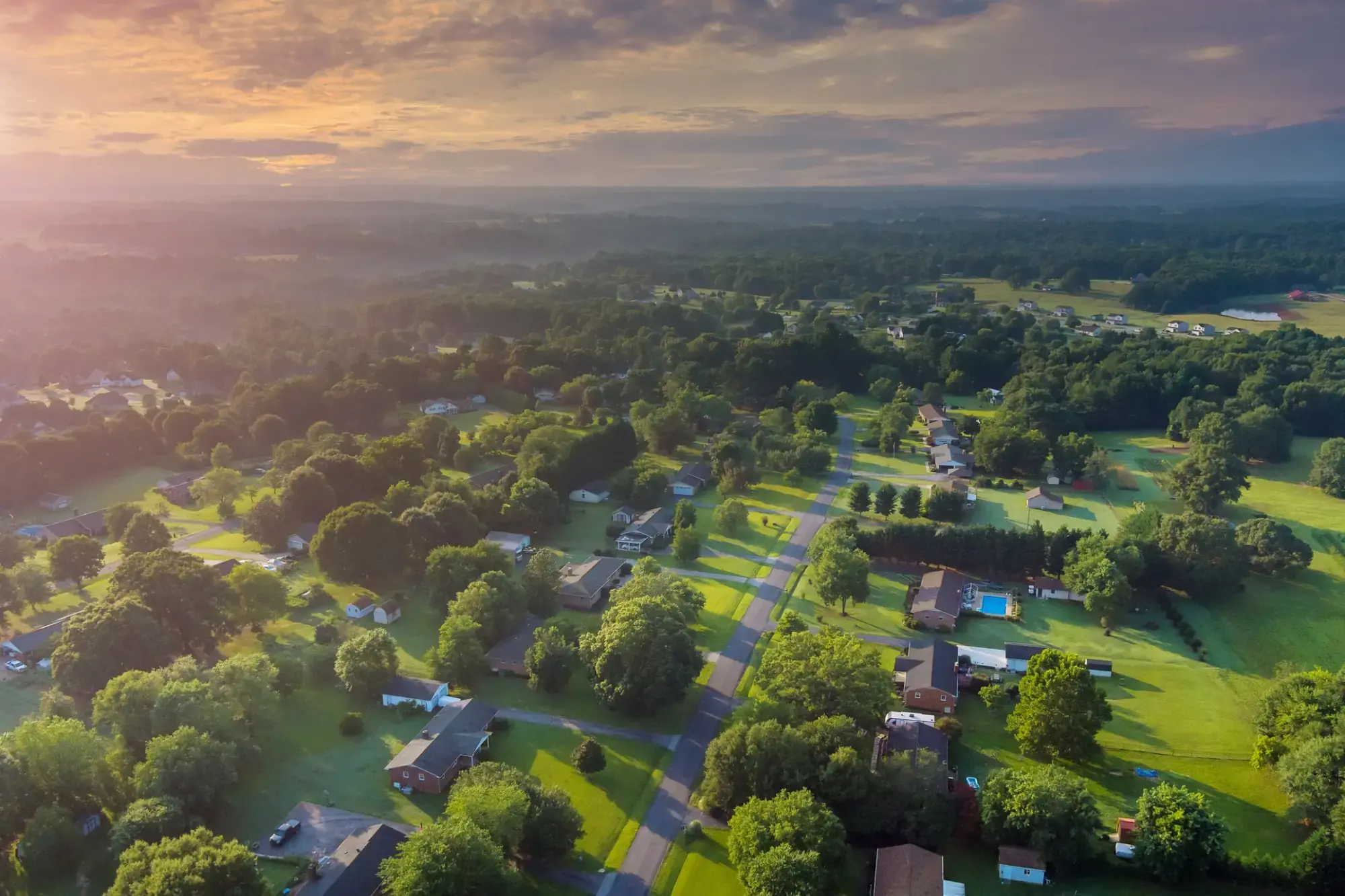
- Rural areas without access to traditional wired internet: Classic use case — any building outside city limits where cable/fiber was never built out, but there's a cell tower or WISP (Wireless Internet Service Provider) tower within a few miles. This includes farms, homes, small businesses, local government buildings, libraries, and school facilities. Read more about how fixed wireless is bridging the digital divide in rural America.
- New home construction or developments: When a house is built before fiber/cable lines reach the neighborhood, fixed wireless bridges the gap. Developers sometimes use it temporarily until wired infrastructure catches up, or permanently if the area stays low-density.
- Small businesses in underserved commercial areas: Retail shops, restaurants, or offices in areas where the local cable company hasn't invested in business-grade lines. Fixed wireless can get a business online fast without waiting on installation crews or construction permits.
- Backup/failover connection for critical operations: Businesses that can't afford downtime — medical offices, restaurants with POS systems, financial services — often keep fixed wireless as a secondary connection. If the primary fiber/cable line gets cut (a common issue with construction crews), the business fails over to wireless automatically.
- Temporary or pop-up locations: Construction sites, event venues, food trucks, seasonal retail (holiday pop-up shops), or temporary offices. No point running permanent cable for a location that might only be used for weeks or months.
- Renters and people who want flexibility: People who move frequently or don't want a long-term ISP contract often like fixed wireless (especially 5G home internet) because there's no installation into the building, easy to cancel, and the equipment just moves with you.
- Areas with only one wired ISP monopoly: Even in suburbs/cities with cable available, if there's just one provider, some people switch to fixed wireless from a cell carrier to escape poor customer service, price hikes, or data caps — accepting a slight trade-off in reliability for more competitive pricing or better support.
- Multi-dwelling units or apartment complexes without in-building wiring: Older apartment buildings that were never wired for coexisting cable/fiber providers can use fixed wireless as a workaround, since it doesn't require running new lines inside walls.
- Disaster recovery / emergency connectivity: When wired infrastructure is damaged (storms, floods, earthquakes), fixed wireless can be stood up quickly since it doesn't depend on buried or aerial cable repair.
- Farms and agricultural operations needing IoT/monitoring connectivity: Farms increasingly need connectivity for soil sensors, equipment telematics, and automated irrigation — fixed wireless often covers large rural properties more practically than trying to trench fiber across fields.
The common thread: fixed wireless shines when speed of deployment, lack of wired infrastructure, or the need for a redundant or primary connection matter more than squeezing out the last bit of performance you'd get from fiber.
Is Fixed Wireless Internet the Right Solution for You?
Whether you're a managed service provider juggling multiple client sites, a network administrator solving connectivity gaps, or a business owner expanding into a new territory, fixed wireless offers flexibility that traditional broadband simply can't match. It's not about replacing fiber everywhere—it's about having the right tool for the right job.
If this is something that seems like a good fit for your connectivity needs, check out Kajeet Fixed Wireless - a multi-carrier solution with real-time data insights and automatic failover.







.png)